
Introduction to commonly used membrane structure materials
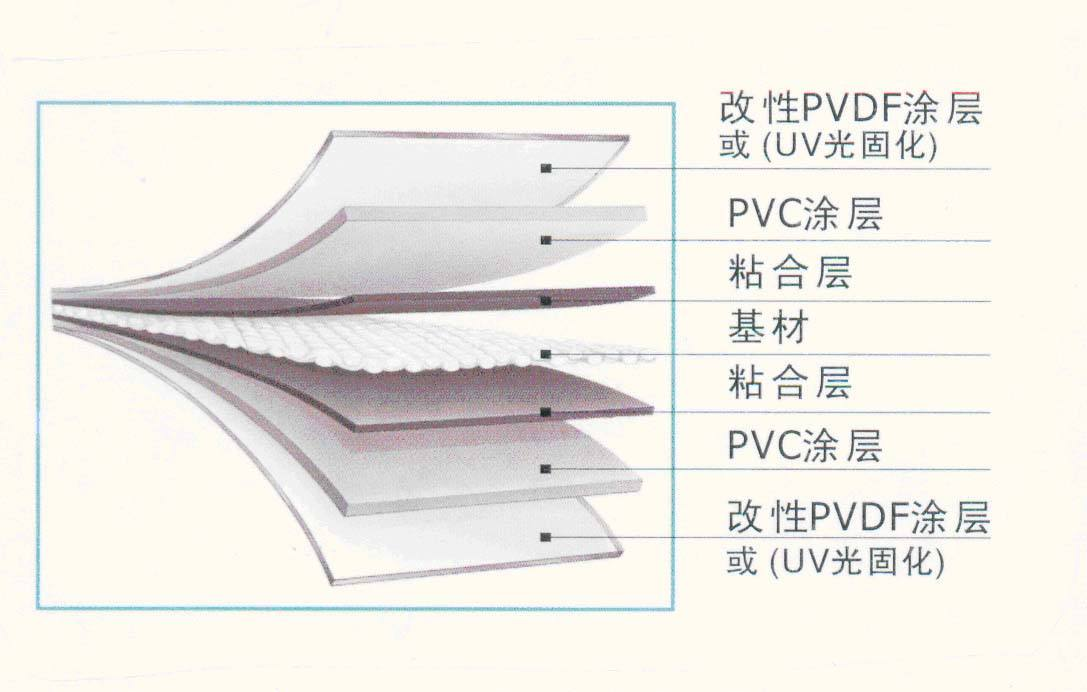
The commonly used membrane materials for membrane structure buildings are generally divided into three categories: ETFE, PTFE, and PVC membrane materials. Fabric film materials: PTFE film materials, PVC film materials. Thermoplastic polymer film material: ETFE film material. PTFE membrane material uses glass fiber as the substrate; PVC film material is made of polyester fiber as the base material and covered with PVC; ETFE film, on the other hand, does not have a substrate and forms a film directly.
ETFE membrane material
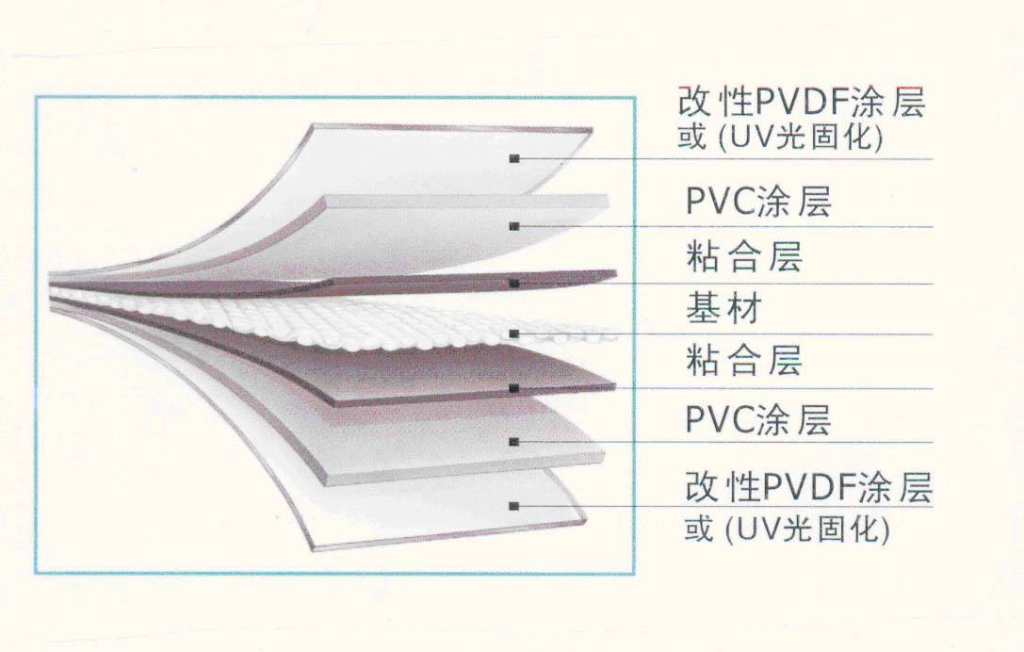
Made directly from ETFE (ethylene tetrafluoroethylene copolymer) raw materials. ETFE not only has excellent impact resistance, electrical performance, thermal stability, and chemical corrosion resistance, but also has high mechanical strength and good processing performance. This type of film material has excellent transparency and is known as “soft glass”. It is lightweight and only 1% of glass of the same size; Good toughness, high tensile strength, not easily torn, and ductility greater than 400%; Strong weather resistance and chemical corrosion resistance, with a melting temperature of up to 200 ℃; Can effectively utilize natural light and save energy; Good acoustic performance. The self-cleaning function makes the surface less prone to contamination, and rainwater can wash away a small amount of dirt, with a cleaning cycle of about 5 years. In addition, ETFE film can be prefabricated into thin film bubbles, which is convenient for construction and maintenance.
PTFE membrane material
PTFE membrane material is a material made by coating polytetrafluoroethylene resin on ultrafine glass fiber fabric. The film material has good welding performance, excellent ultraviolet resistance, aging resistance and flame retardancy. In addition, its anti fouling and self-cleaning properties are the best among all building membrane materials.
Corrosion resistance of PTFE membrane material
Glass fiber base fabric is an inorganic fiber fabric with excellent chemical resistance.
Polytetrafluoroethylene is known as the “plastic king” and is the most chemically stable organic compound. It can resist the erosion of various chemical media, including concentrated nitric acid and “aqua regia”, and is the best material for anti-corrosion coatings. The surface PTFE coating has excellent corrosion resistance.
PTFE membrane material can be used in corrosive environments without affecting the strength and durability of the membrane material.
PVC film material
This type of film material was developed and applied relatively early. It is usually stipulated that the thickness of the PVC coating at the intersection of the warp and weft lines of the polyester fiber base cloth should not be less than 0.2mm. Generally, the coating should not be too thick. To improve the aging resistance of PVC itself, some light and heat stabilizers are often added during the coating process. Light colored transparent products should add a certain amount of UV absorbers, and dark colored products are often stabilized with carbon black.
Corrosion resistance of PVC film material
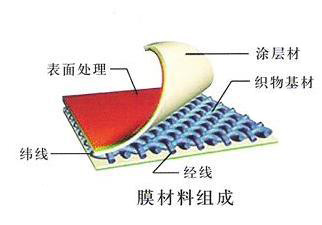
Although polyester fiber base fabric has poor chemical resistance, its corrosion resistance is greatly improved after being sealed with PVC coating.
The surface coating PVDF has excellent corrosion resistance.
PVC film material that has undergone special surface treatment can be used in environments with corrosive gases.