PTFE membrane material in sports venues
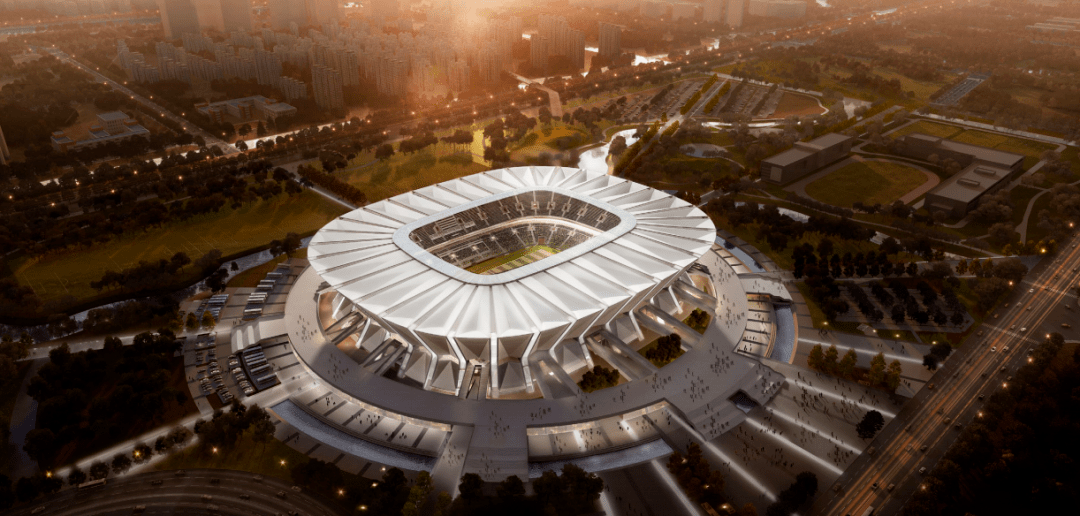
As one of the venues hosting the 2023 Asian Cup in China, the Kunshan Football Stadium in Suzhou was designed and built to meet FIFA International A-level competition standards. With a seating capacity of approximately 45,000, the stadium features a concrete double-column system and a lightweight, translucent PTFE membrane structure, combining rigidity with flexibility.
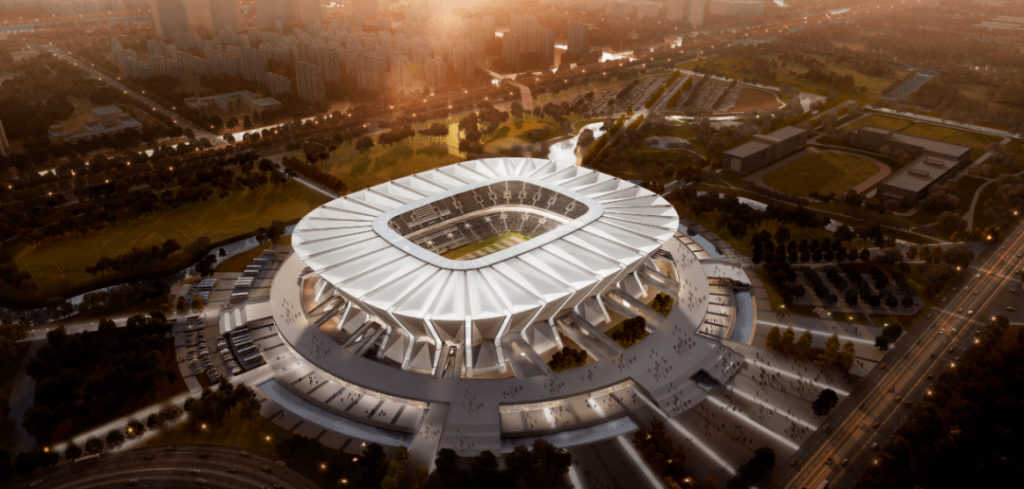
Membrane structures are becoming increasingly common
Membrane structure architecture emerged as a new architectural form in the 1950s. The U.S. Pavilion at the 1970 Osaka Expo utilized fiberglass fabric coated with polyvinyl chloride (PVC) resin, marking the beginning of rapid advancements in membrane structure applications.
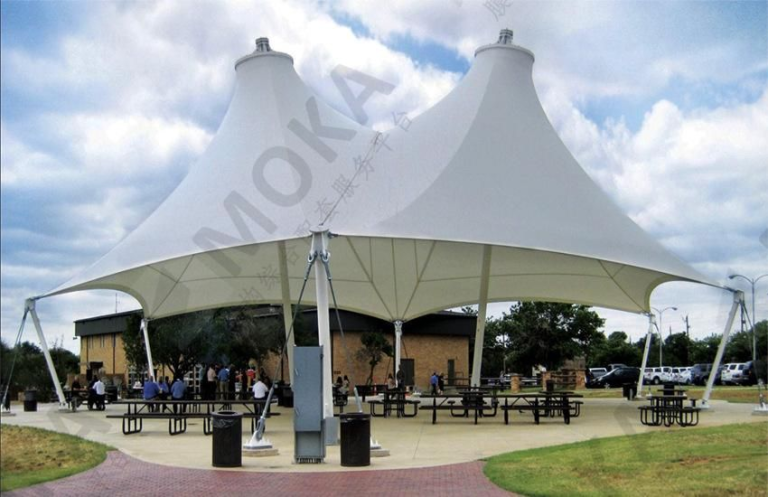
Membrane structure buildings weigh only one-thirtieth of traditional structures and can overcome the difficulties of large-span unsupported construction in conventional designs. They feature free-form, lightweight aesthetics, simple fabrication, and rapid installation, making them widely adopted worldwide.
Film materials used in construction projects are divided into two main categories: fabric-based membranes and non-fabric-based membranes. Among them, fabric-based membranes commonly include PVC membranes and PTFE membranes. In the late 20th century, a new type of membrane material emerged, with the chemical composition being ethylene-tetrafluoroethylene copolymer, known as ETFE.
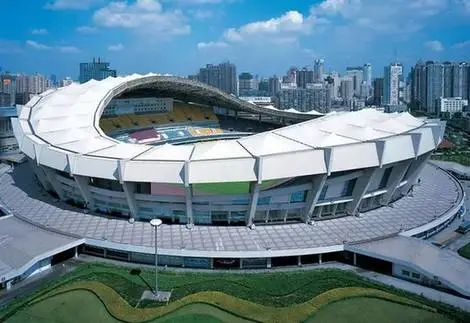
The 7th National Games were held in 1997 at the Shanghai Stadium, featuring a saddle-shaped large cantilevered steel pipe spatial roof structure over the spectator area, covered with a milky white PTFE membrane material spanning 36,000 square meters, marking China’s first application of membrane structures in large-scale permanent buildings.
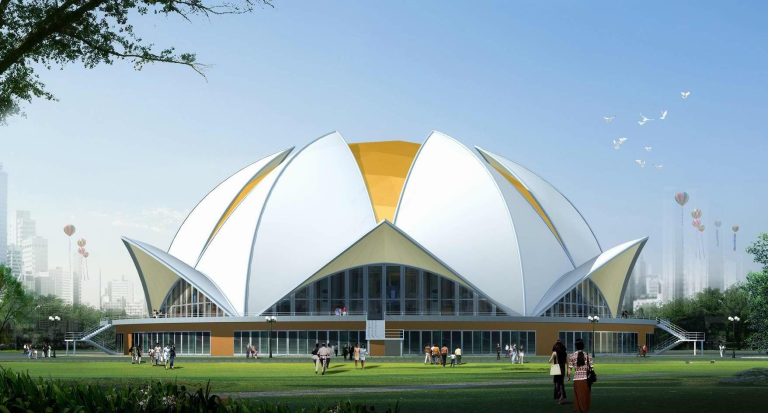
As the main venue of the 2014 Hebei Provincial Games, the Iron Lion of Cangzhou Stadium in Hebei Province is shaped like a lotus throne, which is composed of 20 white translucent PTFE film awnings in the shape of lotus petals.
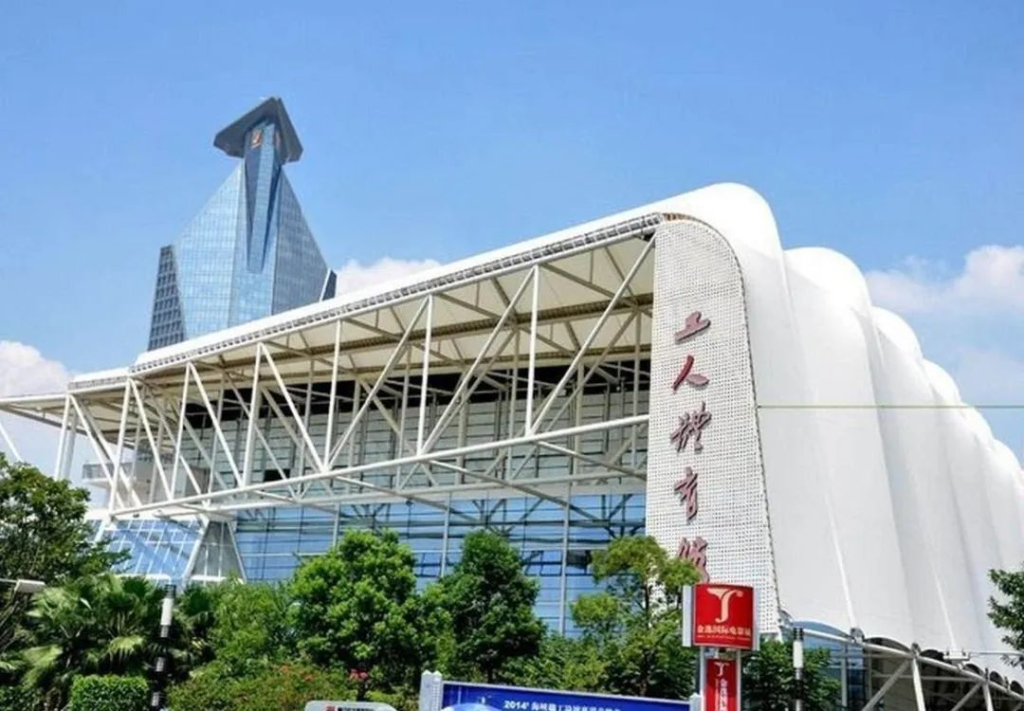
The construction area of Xiamen Workers’ Gymnasium is about 80000 square meters. The main gymnasium adopts a large-span steel frame membrane structure with a PTFE membrane structure on the surface, which enables the large internal space to meet the needs and lighting requirements.
There are also many PTFE membrane structures in foreign countries, which are the preferred membrane material for permanent buildings and are widely used in facilities such as sports venues, commercial roofs, and stands.
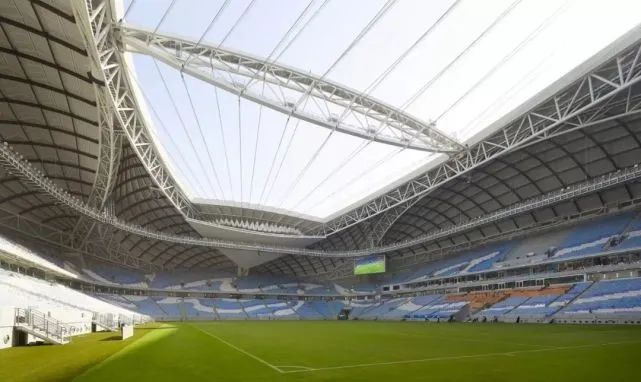
The 22nd FIFA World Cup 2022 will be held in Qatar, Arab Republic. The Al Janoub Stadium in Qatar is a football stadium that can accommodate 40000 people. The stadium’s retractable roof is made of PTFE membrane material, which when unfolded, resembles a sail covering the top of the stadium, creating a sheltered environment for summer football matches.
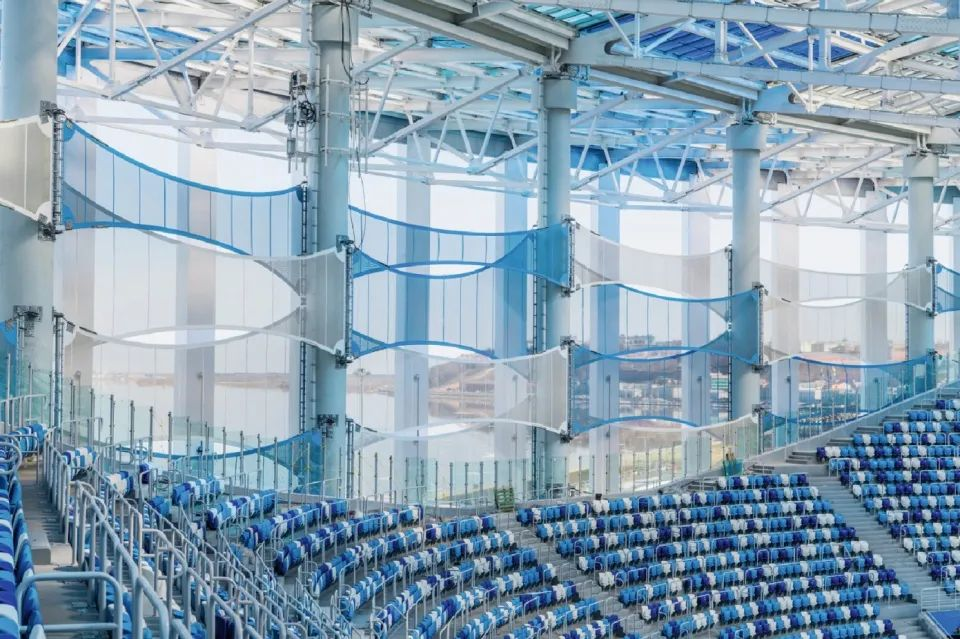
Many buildings in Russia also use PTFE membrane materials. The Nizhny Novgorod Stadium, built for the 2018 World Cup in Russia, is located at the confluence of the Volga and Oka rivers. The stadium stands have 45000 seats, and the exterior of the stadium is composed of blue and white PTFE membrane structures.
The Rostov Stadium, located on the banks of the Don River, features an open tensioned membrane roof consisting of 46 PTFE membrane structural components. The Don River is the “Father River” of Russia, and many people know that both the Don River and Rostov come from the great writer Sholokhov’s work “The Quiet Don River”.
Performance of PTFE
Polytetrafluoroethylene (PTFE), also known as the “plastic king”, is a polymer made by polymerizing tetrafluoroethylene as a monomer. Heat resistant and cold resistant, can be used for a long time at -180~260 º C. Acid and alkali resistant, almost insoluble in all solvents.
PTFE membrane material has many excellent characteristics: flexible design, multiple light transmittance, light weight, high strength, energy saving, surface waterproofing, and not easily oxidized. The advantages of PTFE membrane material are incomparable to other materials and glass.
Lightweight: It is a small part of traditional building materials, with a weight of no more than 1.5kg per square meter;
High strength: The PTFE membrane material commonly used in sports venues is made of extremely fine glass fiber fabric as the substrate, with a tensile strength of over 7000 N/5 cm, which can meet the stress requirements of large-span spaces. Even stronger than steel wires of the same diameter;
Flexibility: can be stretched into various dynamic curved shapes;
Transparency: During the day, the incident light becomes natural thermal radiation without shadows, with a reflectivity of 73% for solar energy and minimal heat absorption;
High self-cleaning: It hardly sticks to any dust, and solid materials cannot adhere to its surface. It does not require special cleaning and can be washed away by natural rainfall;
High chemical stability: able to withstand temperatures above 300 ℃, in addition to sodium hydroxide, it also contains strong acids (aqua regia, strong oxidants, reducing agents, and various organic solvents), and does not affect the surface of woven fabrics in harsh environments;
Long service life: can be used for at least 25 years.