Membrane structure design
The design of membrane structures primarily involves four major aspects: form design, initial equilibrium shape analysis, load analysis, and cutting analysis. Through form design, the architectural planar dimensions, three-dimensional modeling, and clear height volume are determined, along with the coordinates of control points, structural forms, material selection, and construction methods. Initial equilibrium shape analysis, also known as form-finding analysis, is crucial. Since membrane materials lack compressive and bending stiffness and exhibit poor shear strength, their rigidity and stability rely on curvature variations and prestress within the membrane surface. For membrane structures, a stress-free state is impossible at any time, so the final shape of the membrane surface must satisfy mechanical equilibrium under specific boundary and prestress conditions, serving as the basis for load and cutting analyses. Common form-finding methods for membrane structures include dynamic relaxation, force density, and finite element methods. The loads typically considered in membrane structures are wind and snow loads. Under these loads, membrane materials undergo significant deformation, and as the shape changes, load distribution also alters. Therefore, precise calculations of structural deformation and stress require geometric nonlinear approaches. Another objective of load analysis is to determine the initial prestress in cables and membranes. Under external loads, stress in one direction increases while decreasing in another, necessitating initial prestress levels that prevent stress from dropping to zero under the most unfavorable loads—avoiding wrinkling. Due to the lightweight and low natural frequency of membrane materials, they are highly susceptible to wind-induced vibrations, which can lead to material failure. Excessive initial prestress increases material strain, accelerates aging, and reduces strength reserves, while also raising the strength requirements for load-bearing components and complicating construction and installation. Thus, initial prestress must be determined through load calculations. The membrane structures formed through form-finding analysis are typically three-dimensional non-developable spatial surfaces. The critical challenge in membrane engineering is how to cut and tension two-dimensional materials to achieve the desired three-dimensional spatial shape, which is the core focus of cutting analysis.
The membrane structure design software mainly includes the following:
- German membrane structure design software easy10.0
- Italian membrane structure design software Forten4000
- Tongji University Membrane Structure Design Software 3D3S11.0
- Shanghai Jiao Tong University membrane structure design software SMCAD4.0
- Singapore membrane structure design software Winfabric
- Japanese solar membrane structure design software Images
- MEMBS software for membrane structure design in the spatial structure room of the Institute of Structural Engineering, China Academy of Building Research
- FABDES, an Australian membrane structure design software
Membrane structure system
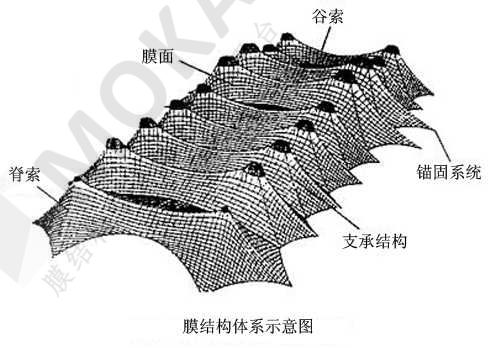
The membrane structure system consists of membrane surface, edge and spine cables, valley cables, supporting structures, anchoring systems, and connecting nodes between various parts, as shown in the following schematic diagram:
Classified by support
Membrane structures are classified according to their support conditions into flexible support structure systems, rigid support structure systems, and hybrid support structure systems.
Classified by structure
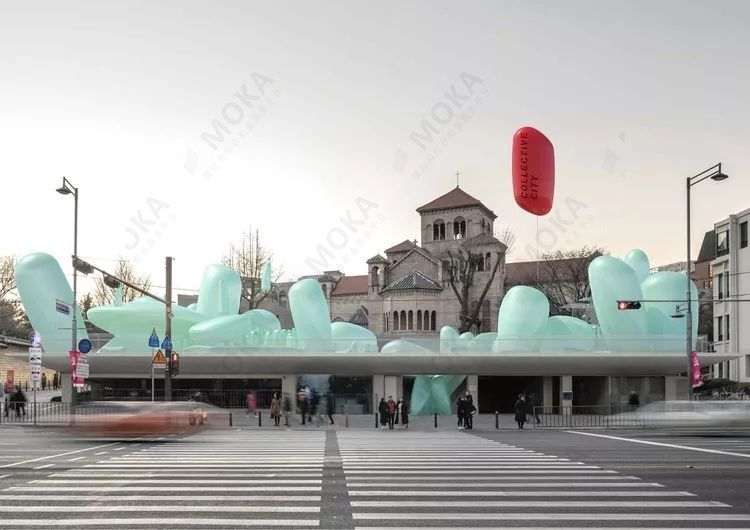
Membrane structures can be divided into skeletal membrane structures, tensioned membrane structures, and inflatable membrane structures according to their structure.
Classification of membrane structure building forms:
Structurally, it can be divided into three forms: skeleton membrane structure, tension membrane structure, and inflatable membrane structure.
- Frame Supported Structure
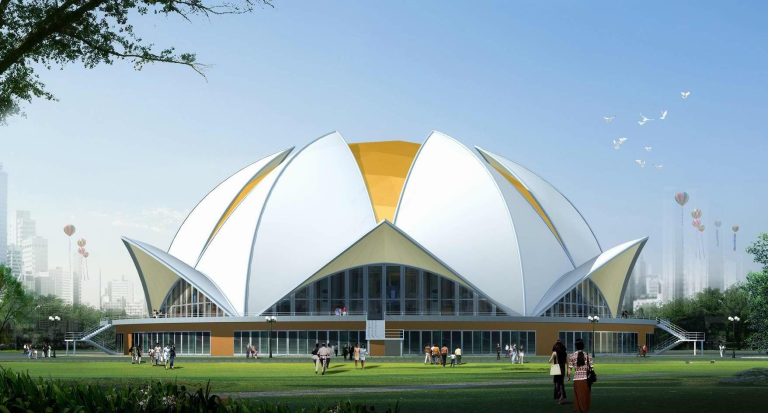
The roof skeleton composed of steel structure or integrated materials, with membrane material tensioned above it, has high stability in the lower support structure. Due to the relatively simple roof shape, the opening is not easily restricted, and the high economic benefits, it is widely applicable to any large or small space. - Tension Suspension Structure
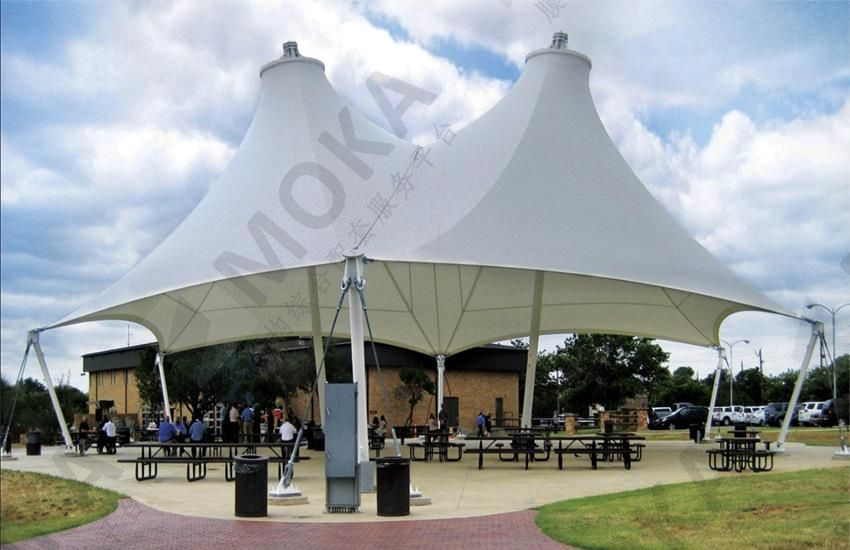
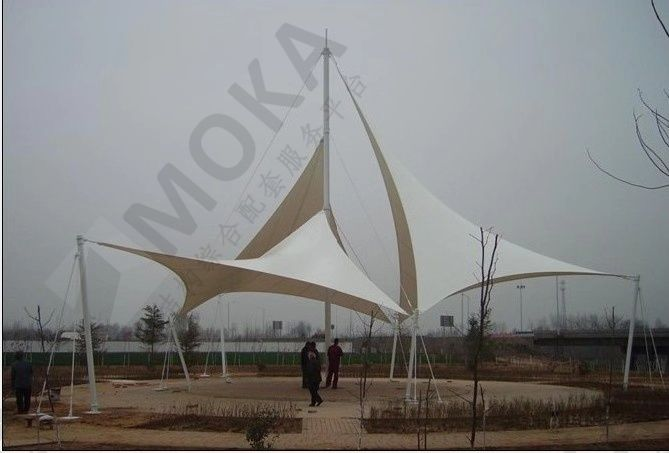
Composed of membrane material, steel cables, and pillars, tension is introduced into the membrane material through steel cables and pillars to achieve stability. In addition to practical, creative, innovative, and aesthetically pleasing designs, it is also the most effective form of construction that showcases the spirit of membrane structures Large span spaces also often use steel cables and compression materials to form a steel cable network to support the upper membrane material. Due to high construction precision requirements, strong structural performance, and rich expressive power, the cost is slightly higher than that of skeleton membrane structures. - Inflatable membrane structure
Inflatable membrane structure is to fix the membrane material around the roof structure, use the air supply system to raise the indoor air pressure to a certain pressure, and create a pressure difference between the inside and outside of the roof to resist external forces. By using air pressure to support and steel cables as auxiliary materials, there is no need for any beams or columns to support, which can obtain larger space, construction is fast, and economic benefits are high. However, it requires 24-hour operation of the air supply fan, and the cost of continuous operation and machine maintenance is relatively high.
Nowadays, membrane structures can be seen more and more in cities. Membrane structures have been applied to various types of building structures and play an indispensable role in our cities.